



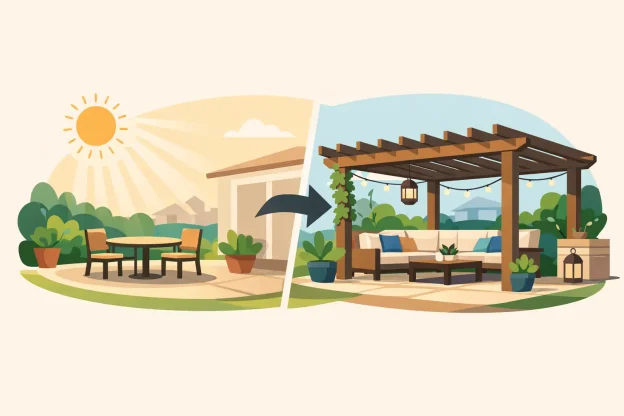
A west-facing Toronto patio can be beautiful at 10 a.m. and nearly unusable by late afternoon. The right pergola kits for patio shade do more than improve the view from the house: they create a defined outdoor room where dining, lounging and entertaining can continue through the hottest part of the day.
The word “kit” can suggest a one-size-fits-all purchase. Premium pergola systems are more considered than that. The best result comes from matching the structure to your patio’s orientation, drainage conditions, furniture layout, wind exposure and the amount of sun or rain protection you genuinely expect. A pergola that looks excellent but leaves the dining table exposed at dinner time has missed its job.
Start With the Shade You Actually Need
Before comparing finishes or post profiles, consider how you use the space. A conventional open-roof pergola creates filtered shade and an architectural frame, but it will not perform like a solid roof. It is well suited to a patio that already has some tree cover, a lower-sun exposure, or an owner who wants visual definition without blocking all daylight indoors.
If dependable coverage is the priority, a louvred-roof system deserves closer consideration. Adjustable louvers can be positioned to manage direct sun, opened to release heat, and closed when weather changes. Many systems also direct rainwater into integrated gutters and downspouts. This makes them especially appealing over an outdoor dining area, sectional, fire table arrangement or outdoor kitchen where cushions, table settings and guests need more protection.
Fixed-roof pergolas sit between these two approaches. They can provide consistent shade and a strong visual statement, often with a translucent or insulated roof option depending on the system. The trade-off is less flexibility. A fixed roof may darken an adjoining interior room, retain more heat in certain exposures, and require extra thought around snow load and drainage.
For many Greater Toronto Area homeowners, the decision comes down to whether the pergola is intended as a fair-weather enhancement or a structure that supports longer, less weather-dependent use of the patio. Both can be excellent choices when expectations are clear from the beginning.
Pergola Kits for Patio Shade: Choose the Right Roof Style
Roof design affects comfort more than any other single feature. It is worth looking beyond a showroom photograph and picturing the pergola at breakfast, midday, sunset and during a summer rain.
Open slats and decorative rafters
Traditional rafters or fixed slats offer partial shade, pleasing shadows and a lighter visual presence. They work beautifully in garden settings and on patios where the goal is to soften the sun rather than exclude it. Depending on orientation, however, slats may provide limited relief when the sun is low. An east- or west-facing patio often needs a secondary strategy, such as retractable side screens, drapery panels, umbrellas or carefully placed planting.
Adjustable louvres
Louvred pergolas suit homeowners who want active control. Rotating blades let you adjust for changing sun angles, ventilation and rain. Some premium systems can be motorized and paired with integrated lighting, screens and heaters, making the structure feel more like an outdoor room than a seasonal accessory.
They require a higher initial investment and a properly prepared installation surface. Yet for a primary entertaining patio, their flexibility can justify the cost. Look closely at water management, motor quality, snow-load ratings, wind resistance and the service support available after installation.
Fixed panels or canopy roofs
A fixed roof can be an efficient answer where uninterrupted shade is the goal. It is particularly practical over a service area, outdoor kitchen or compact condominium terrace where a consistent overhead cover matters more than adjustability. The best material will depend on heat gain, desired light transmission, maintenance tolerance and local building requirements.
Fabric canopies introduce a softer, resort-inspired look, while rigid panels offer a more permanent appearance. Fabric may need seasonal care and should be selected with wind, UV exposure and drainage in mind. Rigid roofing can be longer-lasting but may carry more visual weight.
Material Matters in Canadian Conditions
A pergola is exposed to more than summer sun. In Southern Ontario, it may face snow, freeze-thaw cycles, high winds, heavy rain and pollen buildup, sometimes within the same year. Material selection should reflect this reality.
Powder-coated aluminium is a popular choice for contemporary pergola systems because it is low-maintenance, corrosion-resistant and available in refined neutral colours. It can suit modern architecture, condominium terraces and poolside spaces particularly well. Quality powder coating matters, especially near pools or waterfront cottages where moisture and chemical exposure can be more demanding.
Wood brings warmth and natural character that aluminium cannot fully replicate. Cedar and other suitable species can complement traditional homes, gardens and cottage properties. The commitment is ongoing maintenance: cleaning, staining or sealing, and inspecting for moisture-related movement. A wood pergola can age beautifully, but it should be chosen by owners who appreciate that patina and are prepared to care for it.
Steel and hybrid structures can offer exceptional strength and a more tailored architectural look. They may be appropriate for larger spans or commercial settings, but finish quality, installation expertise and rust prevention are central to long-term performance.
No material is automatically better. A sleek aluminium louvred pergola might be ideal beside a contemporary pool, while a carefully finished wood structure may belong naturally in a mature ravine garden. The surrounding architecture, furniture frames and landscape materials should guide the choice.
Size the Structure Around Furniture, Not Empty Concrete
A common planning mistake is choosing a pergola based on the patio’s total dimensions. Instead, begin with the furniture arrangement that needs shade. Measure the dining table with chairs pulled out, the sectional with its coffee table, or the lounge grouping as it will be used rather than as it appears when tucked in.
For dining, allow space for chairs to slide back comfortably without hitting posts. For a lounge area, leave room for circulation around the seating and access to side tables. If the pergola is covering both dining and lounging zones, consider whether one larger structure will feel proportionate or whether two smaller defined areas will better suit the architecture.
Post placement deserves special attention. A post located at the corner of a sectional may be harmless; one that interrupts a key pathway or cuts into a dining chair position will be frustrating every day. This is also where a consultation-led planning process can save time. Reviewing a scaled plan, patio photos and furniture dimensions before ordering helps prevent expensive compromises later.
Height matters as well. A taller pergola can feel airy and elegant, but may provide less low-angle shade unless screens or side elements are included. A lower profile can feel more intimate, although it must still maintain comfortable head clearance and suit doors, windows, eaves and sightlines from indoors.
Plan for Water, Wind and Local Requirements
A rain-ready pergola needs a clear drainage path. On louvred models, water is usually channelled through gutters in the frame and down through the posts. Those downspouts must discharge away from the home’s foundation and should not create icy patches on a walkway. The patio slope, existing drains and nearby landscaping all affect the plan.
Wind is equally relevant, particularly on exposed rooftops, waterfront properties and open suburban lots. Retractable screens, curtains and fabric components can behave very differently in gusty conditions than a permanent frame. Ask how accessories are rated, when they should be retracted, and what anchoring method is specified for your surface.
In Toronto and surrounding municipalities, permit requirements vary based on the structure’s size, location, attachment to the house and roof design. Setbacks, height limits and lot coverage can also apply. A free-standing decorative pergola may be handled differently from a roofed, motorized system attached to the home. Confirm the requirements before finalizing the order, not after the installation date is booked.
Condominium owners have an additional layer of approval. Terrace load limits, wind conditions, building rules, elevator access and management approvals can shape which systems are practical. A lighter, freestanding solution may be preferable in some cases, while a permanent structure may not be permitted at all.
Add Features That Earn Their Place
Accessories should solve a real comfort issue rather than simply fill a specification sheet. Integrated LED lighting is useful when dinner regularly extends after sunset. Retractable screens can reduce glare, insects and low-angle sun. Heaters may extend shoulder-season use, though they should be selected with proper clearances, power availability and wind exposure in mind.
A pergola also needs to work with the furniture underneath it. Consider whether a large dining table requires brighter task lighting, whether a deep-seating sectional needs screen protection, and whether a fire table creates clearance requirements. Coordinate frame colours, cushion fabrics, planters and outdoor rugs so the finished area feels considered rather than assembled in stages.
At Deck, Home & Patio, these decisions are best made by viewing the patio as a complete setting. The pergola, seating, dining furniture and accessories should support one another in proportion, material and function.
A Better Way to Begin
Bring together a few practical details before comparing systems: overall patio dimensions, photos from inside and outside, the direction of afternoon sun, existing furniture or a proposed layout, and any known property or condominium restrictions. Those details make it much easier to distinguish a pergola that merely fits from one that genuinely improves how the patio is used.
The most satisfying pergola is not necessarily the largest or the most feature-packed. It is the one that gives your favourite outdoor moments a reliable place to happen – whether that is a quiet coffee, a long family meal or an evening with friends when the weather refuses to follow the plan.