



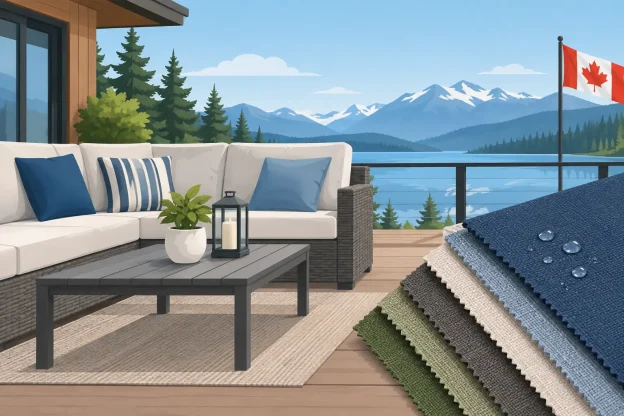
A fabric swatch can look perfect under showroom lighting and feel entirely different after a July afternoon on a sun-facing Toronto terrace. When considering how to select outdoor fabric, start with the conditions it must live in, not simply the colour that catches your eye. The right fabric should support the way you use your space, complement the frame finish and architecture, and continue to look inviting after sun, rain, pollen, sunscreen and everyday entertaining.
For a premium outdoor furniture purchase, fabric is not a minor finishing detail. It influences comfort, maintenance, longevity and the overall character of a sectional, dining chair, chaise or lounge collection. A thoughtful selection gives the furniture a tailored, considered appearance while making day-to-day ownership easier.
How to Select Outdoor Fabric for Your Setting
The first question is not which pattern you prefer. It is where the furniture will sit and how often it will be used. A covered condominium balcony has different requirements from an exposed pool deck, lakeside cottage or hospitality patio.
On a south- or west-facing patio, ultraviolet resistance deserves priority. Intense direct sunlight can fade lesser fabrics quickly, particularly dark navy, saturated red and deep charcoal tones. For uncovered spaces, solution-dyed acrylic is often an excellent choice because colour is added to the fibre before it is woven. This helps the fabric retain its colour through regular sun exposure and gives many performance collections a softer, more upholstery-like hand than people expect from outdoor material.
Olefin, also called polypropylene, is another strong outdoor performer. It is colourfast, resists moisture and is often a practical choice for areas that see frequent use or occasional spills. Its feel and available texture vary by collection, so it is worth comparing the actual samples rather than selecting by fibre content alone. Polyester can be suitable in protected settings, but quality and finish matter considerably. A fabric described simply as “outdoor polyester” does not automatically offer the same fade resistance or cleanability as a premium solution-dyed performance fabric.
For a covered porch or pergola, you have more freedom to prioritize texture and layered colour. For an open deck, choose a fabric that earns its place through performance first, then refine the look with texture, weave and accent cushions.
Look Beyond Water Resistance
Outdoor fabrics are often described as water-resistant, water-repellent or quick-drying. These terms are useful, but they are not interchangeable.
A water-repellent finish helps droplets bead on the surface, buying you time to wipe up a spill or shake off light rain. It does not mean the cushion is waterproof. During prolonged rainfall, water can work through seams, zippers and fabric surfaces, especially if cushions are left flat. The cushion filling and construction matter just as much as the cover.
Quick-drying cushions are particularly valuable in Canadian summers, when a warm morning can follow an overnight storm. Look for breathable cushion designs, reticulated foam or drainage-friendly fills where appropriate. Furniture that dries well is more comfortable to use and less likely to hold moisture against the fabric for extended periods.
For cottage properties, poolside seating and uncovered sectionals, plan for a sensible cushion routine. Standing cushions on edge after rain, allowing air to circulate and using fitted protective covers during long periods away can meaningfully extend the life of both fabric and filling. No outdoor fabric is entirely maintenance-free when it remains exposed through every weather event.
Choose Colour With Sun, Surroundings and Use in Mind
Colour selection is where performance and design often meet. Light neutrals such as sand, oatmeal, stone and soft grey tend to stay cooler in full sun. They also create a relaxed, spacious feeling on compact balconies and can coordinate easily with teak, powder-coated aluminum and woven outdoor furniture. Their trade-off is visibility: food, makeup, tree debris and city dust may show sooner.
Dark colours can ground a large terrace and pair beautifully with black, bronze or charcoal frames. They can also conceal certain marks better than pale fabric. However, they may become noticeably warmer in direct sunshine, and repeated UV exposure is less forgiving if the fabric is not made for it.
Mid-tones are often the most accommodating choice for busy family decks and commercial environments. Heathered greys, taupes, denim-inspired blues and soft mineral shades disguise everyday dust while maintaining a refined appearance. A woven texture or subtle multi-colour construction is usually more forgiving than a smooth, solid ivory surface.
Before approving a colour, view the sample outdoors at different times of day. Hold it beside the frame finish, decking, stone, brick and exterior siding. Natural light reveals undertones that indoor lighting can hide: a grey may lean blue, a beige may read yellow, and a white may appear unexpectedly cool against warm wood.
Match the Fabric to the Furniture Category
Not every outdoor fabric is designed for every application. Deep seating cushions need supple upholstery fabric that feels comfortable against bare skin and drapes neatly around tailored edges. Sling furniture requires a technical mesh or vinyl-coated polyester designed to carry body weight without stretching excessively. Using a decorative cushion fabric where a sling material is required is not an option, regardless of how well the colours coordinate.
Dining chair cushions benefit from fabrics that are easy to wipe and not overly textured, especially where meals are served regularly. Chaise loungers and daybeds call for a fabric that feels good after swimming, resists sunscreen residue and dries efficiently. Decorative toss pillows provide the best place to introduce a bolder pattern, contrast welt or seasonal colour, since they are easier to bring indoors or replace than a full sectional cushion set.
Commercial patios require another layer of consideration. Restaurant, hotel and club spaces need fabric that can manage high guest turnover, frequent cleaning and visual consistency across many pieces. In these projects, durability, cleanability, available replacement yardage and lead-time coordination can be as significant as colour.
Read Performance Information Carefully
Specifications are helpful, but they should be interpreted in context. Abrasion ratings can indicate how a fabric stands up to repeated rubbing, yet outdoor exposure introduces other factors: UV degradation, moisture, mildew, cleaning chemicals and airborne pollutants. A high abrasion number does not compensate for poor fade resistance on an uncovered roof terrace.
Ask about the manufacturer’s warranty and what it covers. Fade, mildew, staining and workmanship may each have different terms. Also ask whether the fabric is suitable for the particular piece you are ordering and whether the same fabric can be used across cushions, umbrellas and accessories. Coordinating materials can create a composed look, but an umbrella canopy and a deep-seat cushion may need different performance characteristics.
It is also wise to confirm whether replacement covers can be ordered later. Custom outdoor furniture is built for long-term enjoyment. Knowing that a collection offers ongoing fabric availability, or a compatible future alternative, provides valuable flexibility if your design evolves or a cushion is damaged.
Make Cleaning Part of the Decision
The best fabric is one you will feel comfortable using. If every spill creates anxiety, the colour or weave may not suit your household.
Most quality outdoor textiles respond well to prompt attention: brush away loose debris, blot spills rather than rubbing them in, and use mild soap with water according to the manufacturer’s care instructions. Avoid harsh bleach mixtures, pressure washing and aggressive scrubbing unless the specific fabric maker permits them. These methods can damage fibres, alter colour or compromise water-repellent finishes.
Consider your real routines. A pale, finely woven cushion may be an excellent choice for a quiet covered terrace used for evening cocktails. A textured mid-tone performance fabric may be better for a family pool area with children, pets and frequent weekend guests. Neither choice is universally better. The right answer comes from being honest about how the space will be lived in.
Use Samples to Build a Complete Outdoor Scheme
A custom-order process gives you the opportunity to compare frame finishes, fabric swatches, umbrella canopies and accent materials together. Take advantage of it. Place samples beside one another rather than judging each in isolation. A warm taupe cushion can make a grey aluminum frame feel more welcoming, while a crisp white fabric can give teak a more contemporary, resort-inspired direction.
Scale matters too. A large-scale botanical or stripe may look restrained on a small swatch but become dominant across a sectional. Conversely, a fine woven texture can add welcome depth across several large cushions without competing with planting, rugs or architectural finishes. If your patio includes patterned tile, a detailed outdoor rug or a strong view, a quieter main upholstery fabric often creates the most enduring result.
At Deck, Home & Patio, fabric selection is best approached as part of the full furniture decision, with the intended location, frame, use pattern and maintenance expectations on the table from the beginning. That consultation helps narrow a very broad range of beautiful options into choices that genuinely fit the project.
Before finalizing, bring your decision back to four practical questions: Will this fabric receive direct sun? How quickly must it dry after rain? What kinds of spills and wear should it handle? And will you still enjoy its colour beside your home’s exterior three seasons from now?
A fabric that answers those questions well will do more than complete the furniture. It will make the patio feel ready whenever the weather gives you the chance to use it.