



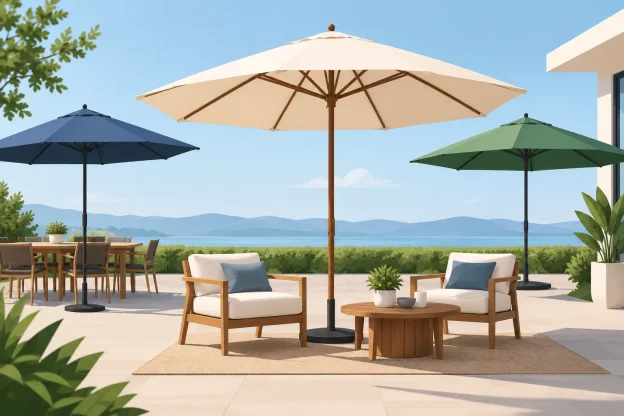
A sunny Toronto afternoon can make a beautiful dining table feel unusable by noon. The right patio umbrellas change that equation, creating a cooler, more comfortable place for lunch, reading, poolside lounging, or a long evening with guests. The challenge is that an umbrella is not simply a finishing accessory. Its size, support, fabric, operating system, and location all affect how well your outdoor room works.
For a premium patio, terrace, cottage deck, or hospitality setting, the best choice begins with the way the space is used. A compact balcony requires a different solution than a pool terrace with deep lounge seating. A windy rooftop has different demands than a sheltered garden. Taking a few practical measurements before choosing colours and canopy shapes will protect both the look of the space and the investment.
Start With Shade, Not Just Table Size
A patio umbrella should shade the people around a table, not merely the tabletop. As a useful starting point, choose a canopy that extends approximately two feet beyond the table edge on each side. A 48-inch round dining table, for example, is generally better served by a 9-foot umbrella than a smaller model that leaves diners exposed as the sun moves.
Shape matters as much as diameter. Round canopies suit round or square tables and create a softer visual presence in a garden. Square umbrellas provide more usable corner-to-corner coverage and often work especially well over conversation sets, sectionals, and compact condo terraces. Rectangular canopies are practical for long dining tables, chaise lounges, and narrow spaces beside a pool.
Coverage is not always about going larger. An oversized canopy can overwhelm a small deck, interfere with doors, catch more wind, and make circulation awkward. On a condominium balcony, measure the clear area around railings, walls, doors, and neighbouring furniture with the umbrella open. At a cottage, consider whether trees, rooflines, or a view of the water will affect the ideal placement.
Centre-Pole or Cantilever?
A centre-pole umbrella remains an excellent choice for dining tables with a built-in umbrella hole. It is visually classic, comparatively straightforward, and available in a broad range of canopy sizes, fabric options, and frame finishes. For a breakfast area or an intimate dining setting, it often delivers the most efficient use of space.
A cantilever, also called an offset umbrella, places the mast to one side and suspends the canopy over the seating area. This keeps the centre of the table or lounge zone clear and makes it easier to arrange low coffee tables, modular sectionals, or multiple chaises. Many premium cantilevers also rotate, tilt, or slide to follow the afternoon sun without moving the base.
The trade-off is structural. Cantilevers need a substantial base or a properly engineered in-ground mounting solution, and they need adequate clearance for the swinging canopy. They are particularly compelling around pools and outdoor lounges, but a consultation and site review can prevent a beautiful model from becoming impractical once installed.
Choosing Patio Umbrellas for Canadian Conditions
Canadian weather asks more of outdoor furniture than a few fair-weather weekends. Strong summer sun, sudden storms, wind, humidity, and freeze-thaw cycles all influence the long-term performance of a patio umbrella. Premium construction is less about a single feature than the way the frame, canopy, hardware, and base work together.
Aluminum frames are a popular choice because they are lightweight, corrosion-resistant, and available in refined powder-coated finishes. They suit contemporary spaces and are manageable for homeowners who will open, close, and cover the umbrella regularly. Fibreglass ribs are especially valuable in areas exposed to wind because they flex more readily than rigid materials. Wood frames can bring warmth and traditional character to a garden, cottage, or teak dining collection, but they require more attentive care and should be selected with an understanding of seasonal storage needs.
Canopy fabric deserves close attention. Solution-dyed acrylic is widely valued in premium outdoor furnishings for colour retention, UV resistance, and breathable performance. It is an excellent choice when the umbrella must coordinate with custom cushions, sling seating, or an established exterior palette. Other performance fabrics may suit particular budgets or applications, but the lowest-cost canopy is rarely the best value if it fades quickly, loses tension, or needs replacement after a short period.
Look at construction details as well: reinforced canopy pockets, durable hubs, quality crank mechanisms, stainless or corrosion-resistant hardware, and venting. A vented canopy allows air to move through the top, helping reduce uplift in a breeze. It is useful, but it is not permission to leave an umbrella open in high winds.
The Base Is a Safety Decision
An umbrella base is often underestimated because it sits below eye level. In practice, it is one of the most important components of the entire installation. A base that is too light can allow a canopy to tip, shift, or become damaged in a gust. It can also damage surrounding furniture, glazing, or decking.
Base requirements depend on canopy size, frame design, local wind exposure, whether the umbrella passes through a table, and the manufacturer’s specifications. Centre-pole umbrellas generally require less counterweight than cantilevers, while larger offset models may need several hundred pounds of weight distributed across a cross base. Never assume one base will suit every umbrella in a collection.
For rooftop terraces, condo balconies, and commercial patios, weight limits and building rules may be part of the decision. For wood decks, the location must also allow the base to sit level without stressing boards or creating a tripping hazard. A professional recommendation is particularly worthwhile when the umbrella is large, motorized, offset, or intended for a high-traffic setting.
Plan the Placement Before Ordering
The sun will not stay in one place simply because the furniture layout looks balanced. Spend time in the intended area at breakfast, midday, and late afternoon, noting where direct light falls. West-facing patios often need more late-day adjustment than sheltered east-facing dining areas. A tilting centre-pole model can help with angled sun, while a rotating cantilever may offer more flexibility over a larger lounge zone.
Also consider movement through the space. Guests should be able to pull out dining chairs, walk to the barbecue, and access doors without brushing against a mast or ducking under a low canopy edge. Standard dining-height umbrellas are designed for seated use, but clearance becomes more important when placed beside a path, outdoor kitchen, or pool entrance.
Visual coordination should come after these functional decisions. A dark canopy can look dramatic against pale stone and may visually anchor a large terrace. Lighter neutrals feel airy and are easier to coordinate with changing cushions or accessories, although they may show environmental staining more readily. Frame finish, canopy colour, and trim can be selected to complement aluminum furniture, woven seating, teak, or the architecture of the home.
Care That Extends the Life of Your Umbrella
Even the best umbrella benefits from routine attention. Close it whenever it is not actively being used, particularly before leaving home or when wind is forecast. Use a fitted protective cover when appropriate, making sure the canopy is dry before covering it for an extended period. Moisture trapped in folds can encourage mildew and leave stubborn marks.
Brush away loose debris and clean the canopy according to the fabric manufacturer’s instructions, usually with mild soap, water, and a soft brush. Avoid harsh cleaners that can compromise water repellency or colour. Check the crank, ribs, locking points, and base fittings periodically, especially after heavy weather. For winter, most residential umbrellas should be cleaned, dried, covered, and stored indoors or in a dry protected location.
Deck, Home & Patio can help customers compare canopy dimensions, frame materials, base requirements, fabrics, and operating features before a custom order is placed. That guidance is especially helpful when coordinating an umbrella with premium dining, lounge, or poolside furniture rather than selecting it as an afterthought.
A well-chosen umbrella does more than block glare. It gives an outdoor space a dependable centre of comfort, so the table, lounge, or terrace you have carefully furnished remains a place people want to use when the day is at its brightest.