



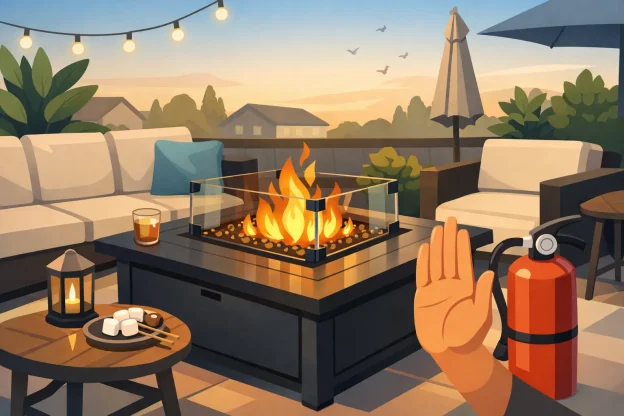
A fire table can turn a cool Toronto evening into the part of the gathering everyone remembers. It also introduces an open flame, a fuel source, hot surfaces and a set of installation requirements that deserve more attention than simply choosing a beautiful finish. These outdoor fire table safety tips will help you create a welcoming setting while protecting your guests, furnishings and home.
The right approach begins before the first ignition. Every fire table model has its own requirements for fuel, burner media, ventilation, clearances and placement. Treat the manufacturer’s manual as part of the product, not paperwork to set aside after delivery. It is the most reliable source for the specific table in front of you.
Start with the right location
A fire table needs open air above and around it. It is made for outdoor use, not for an enclosed sunroom, garage, gazebo or tightly screened structure unless the manufacturer explicitly confirms that installation. Even an area that feels airy can trap heat, smoke or gas if it has a low roof, solid side walls or limited airflow.
Choose a level, stable surface that can comfortably support the table and allow people to move around it. A patio, terrace or deck can be suitable, but suitability depends on the fire table’s construction and installation instructions. Do not assume that a wood deck, composite deck or porcelain-paver terrace is automatically safe because it is outdoors. Confirm the required protection beneath the unit, the heat characteristics of the base and the stated clearances from combustible materials.
Keep the table well away from anything that can catch fire or be damaged by heat. This includes cushions, outdoor rugs, umbrellas, drapery, privacy screens, overhanging branches and decorative planters. A thoughtfully furnished patio often has these elements close at hand, which is why fire-table planning should happen alongside the furniture layout rather than after everything is in place.
Leave a clear circulation zone around the table. Guests should not need to squeeze between the flame and a sofa, nor should they have to reach over the burner to set down a drink. This is especially relevant on compact condo terraces, where every square foot matters. A smaller fire table with proper breathing room is a better choice than a larger model that overwhelms the available space.
Follow outdoor fire table safety tips for propane
Many premium fire tables use a standard propane cylinder, either housed within the base or connected externally. Propane is efficient and convenient, but it must be handled with care. Use only the fuel type and cylinder size approved for the model. Never adapt fittings, substitute parts or connect an extra cylinder to extend run time.
Before each use, inspect the hose, regulator and connections for cracking, abrasion, loose fittings or signs of wear. With the cylinder valve open and the burner controls off, use a manufacturer-approved leak-testing method, commonly a soap-and-water solution applied to the connections. Bubbles indicate a leak. If you suspect one, turn off the gas supply, do not light the table, and arrange for qualified service before using it again.
A propane cylinder must remain upright and properly secured. Never store or use spare cylinders inside the table base unless that compartment is specifically designed for them. Cylinders should not be kept indoors, in a shed, in a vehicle or in any poorly ventilated location. Heat can raise internal pressure, so keep the cylinder away from direct heat sources and never leave it in a hot enclosed car after an exchange or refill.
If you smell gas, hear an unusual hissing sound or see a connection behaving abnormally, stop immediately. Turn off the burner controls and cylinder valve if it is safe to do so, move people away from the area, and follow the appliance manufacturer’s instructions. Do not try to diagnose a gas issue while the table is lit.
Set up the burner correctly
The burner pan and ignition system need to remain clean, dry and unobstructed. Before lighting, remove leaves, pollen, insects and debris that may have collected under a cover. Check that the burner ports are clear and that the ignition electrode is not buried beneath fire media.
Use only the fire glass, lava rock or ceramic media approved for your table. These materials are selected to tolerate high heat and support the intended flame pattern. Decorative stones, beach glass, regular gravel and other improvised materials can crack, shift, block gas flow or create unsafe heat conditions.
Follow the recommended fill level for the media. Too much can cover burner ports and interfere with ignition; too little may leave the burner components exposed or produce an uneven flame. Once the burner is lit, take a moment to observe it. A stable, consistent flame is what you want. Persistent yellowing, sputtering, delayed ignition or flames emerging from an unexpected location are reasons to turn the unit off and have it inspected.
Lighting should be calm and deliberate. Keep faces, hands and loose clothing back from the burner, especially during ignition. If the table does not light as instructed, turn it off and wait the full period specified in the manual before trying again. This pause allows any unburned gas to dissipate.
Furnish the area for comfortable, safer use
A well-planned seating arrangement keeps safety from feeling restrictive. Position lounge chairs and sofas far enough back that guests can enjoy the warmth without leaning into the flame or brushing against a hot table edge. Consider the height of the table as well. A low lounge-height fire table suits deep seating, while a dining-height fire table needs enough setback to keep sleeves, napkins and chair backs clear.
Do not place throw blankets, cushions or serving trays on the fire table surface unless the manufacturer identifies a specific cool-touch area designed for that purpose. Even when the burner is off, surrounding materials may remain hot for some time. A separate side table makes outdoor entertaining easier and reduces the temptation to use the fire table as a coffee table while it is operating.
Umbrellas deserve special attention. A large cantilever umbrella can make a patio feel complete, but it should be closed and positioned well away before lighting the fire table. Fabric, canopy ribs and cords should never pass above or near the flame. The same principle applies to pergola drapes, string lights and overhead heaters.
For homes with children or pets, set expectations before guests arrive. A fire table is not a surface for play, roasting food or climbing. Keep a close watch whenever it is operating, and consider a protective barrier or a different entertaining layout if young children or energetic pets will be nearby.
Respect weather, local rules and shared spaces
Wind changes how a flame behaves. A light breeze may be manageable if the manufacturer allows it, but gusty conditions can push flames toward furniture, lift loose items and make the table uncomfortable to use. Turn the fire table off when winds become unpredictable. Never use it to burn leaves, paper, wood or other materials.
Rain and snow also call for judgement. Some fire tables are designed to withstand outdoor exposure, yet their burners and ignition components should not be operated when wet or filled with standing water. Allow the unit to dry fully, inspect it before use and use a properly fitted cover only after the table has cooled completely.
Municipal rules, fire restrictions and condominium bylaws may be stricter than a product manual. Condos and multi-unit properties can have detailed requirements for propane storage, balcony appliances and open flames. Review these rules before purchasing, not after your furniture plan is complete. At a cottage or rural property, seasonal fire bans may also affect whether a fire feature can be used at a particular time.
Build simple habits into every gathering
The safest fire-table owners are not overly cautious. They are consistent. Before lighting, they check the surroundings, confirm the cylinder and connections are sound, and make sure the table is clear. During use, someone remains nearby. Afterward, they turn off the burner, close the cylinder valve when required by the manufacturer, wait for the unit to cool and then cover it.
Keep an appropriate fire extinguisher accessible, and make sure the adults in the home know where it is and how to use it. Water is not the answer to every fire, particularly where gas or electrical components are involved. If a fire cannot be controlled quickly and safely, move away and call emergency services.
Seasonal maintenance helps preserve both appearance and performance. Clean the exterior with products appropriate for the table’s finish, inspect the gas components at the beginning of the season, and arrange qualified service for any persistent ignition or flame issue. A cover protects against dirt and weather, but it does not replace inspection.
A fire table should feel effortless once the right details are in place. If you are planning a new patio, deck, terrace or cottage setting, selecting the right scale, fuel configuration and furniture layout early can prevent compromises later. Deck, Home & Patio can help you consider those details alongside the design choices, so your outdoor room remains as comfortable and inviting as it looks.