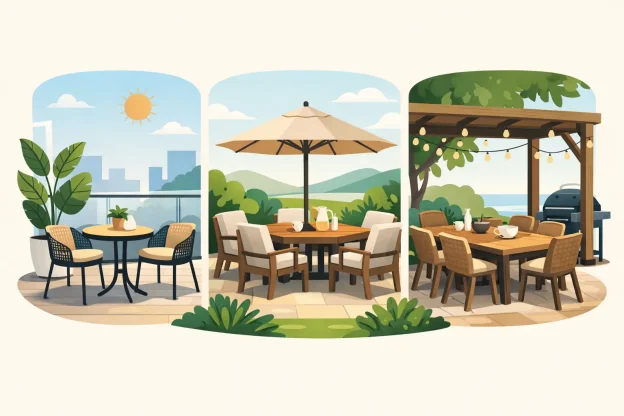

Tag Archives: cantilever umbrella

How to Measure Patio Furniture for Your Space

How to Measure Patio Furniture for Your Space

A patio can look generously sized when it is empty, then feel surprisingly tight once a dining table, chairs, umbrella base, and grill arrive. Knowing how to measure patio furniture before ordering prevents the most common outdoor furnishing disappointment: beautiful pieces that technically fit, but leave no room to live around them.

For a condo balcony, GTA backyard deck, cottage dockside terrace, or poolside entertaining area, the goal is not to fill every available inch. It is to create a layout with comfortable circulation, sensible proportions, and enough flexibility for the way you actually gather outdoors.

Start With the Usable Outdoor Area

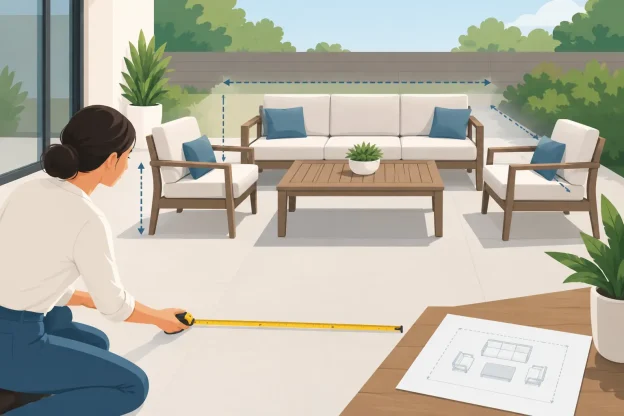
Begin by measuring the surface where furniture can truly sit, not simply the overall dimensions of your deck, patio, or balcony. Record the length and width in inches or feet, then note every fixed feature that reduces usable space: railings, planters, steps, doors, posts, grills, hot tubs, outdoor kitchens, fire features, utility boxes, and built-in benches.

On a deck, pay particular attention to stair openings and routes from the house to the yard. On a condo terrace, account for the door swing, railing geometry, mechanical equipment, and any building restrictions on placement. A patio may have irregular edges, garden beds, or a slope that makes one section less practical for seating.

Create a simple overhead sketch. It does not need to be architectural. Mark the finished dimensions, fixed elements, door locations, and the direction each door opens. Photograph the area as well. These details make it far easier to compare product dimensions and discuss a proposed layout with a furniture consultant.

Before choosing pieces, measure these four practical items:

  • The clear floor area available for furniture
  • Door, gate, elevator, hallway, and stair dimensions for delivery access
  • The depth of steps, thresholds, and narrow turns along the delivery route
  • Overhead restrictions such as soffits, balcony ceilings, trees, or pergola beams

Delivery access is easy to overlook with premium outdoor furniture. A generously sized sectional or a fully assembled dining table may suit the patio perfectly but require a different route, modular configuration, or professional delivery plan to reach it.

How to Measure Patio Furniture Footprints

Product dimensions describe the furniture itself. Your layout needs to account for the furniture plus the space people require to pull out chairs, walk behind seating, recline, or open an umbrella.

For each piece, note width, depth, and height. Width is typically side to side when facing the piece; depth is front to back. With sectionals, measure every component and map the final configuration rather than relying on one overall photo. A left-arm chaise and right-arm chaise can change both the visual balance and the required circulation path.

Use painter’s tape, newspaper, flattened cardboard, or a cut-to-size drop cloth to mark the footprint on the ground. This is one of the most useful ways to test a plan. Stand within the taped arrangement, open the patio door, pull out an imaginary dining chair, and walk from the seating area to the grill. The layout may reveal a pinch point that was not obvious on paper.

Do not forget pieces that extend beyond their stated footprint. A reclining lounge chair needs room behind it. A chaise needs clearance at the foot end. Dining chairs occupy more depth once pulled away from the table. Swivel chairs need room to rotate without striking a railing, planter, or adjacent chair.

Allow Space for Movement, Not Just Placement

As a working rule, leave about 30 to 36 inches for a comfortable walkway. A secondary route that is used less often may function with somewhat less, but busy routes from the door to the yard, pool, or kitchen deserve more room.

For outdoor dining, allow approximately 36 inches from the table edge to a wall, railing, or other obstruction where possible. This gives a seated guest room to move a chair. If people will need to pass behind those chairs during a meal, aim for 48 inches or more. The right clearance depends on chair depth, arm style, and whether the space is intended for intimate family meals or larger entertaining.

Lounge seating needs a different kind of breathing room. A compact conversation set can feel inviting with a coffee table 16 to 18 inches from the sofa or lounge chairs. With a fire table, follow the manufacturer’s clearance guidance and plan enough space for guests to sit comfortably without blocking the route around the feature. Fire tables are often the visual centre of a patio, but they should not turn a narrow terrace into an obstacle course.

Measure by Furniture Category

Dining Tables and Chairs

A table’s stated seating capacity is only a starting point. Measure its width and length, then add the depth of a pulled-out chair on all sides that will be used. Round tables are often excellent for compact patios because they soften circulation and eliminate corner conflicts. Rectangular tables can be more efficient for long, narrow decks, particularly when one side can sit closer to a railing or wall.

If an umbrella is planned, measure the fully open canopy, not only the pole or table opening. A large cantilever umbrella needs substantial clearance behind and beside the seating area as it rotates and tilts. Its base also has a footprint that must remain stable and unobstructed.

Sectionals, Sofas, and Lounge Chairs

Measure the total sectional shape, including corner modules, chaises, end tables, and any ottomans. A sectional that fills one corner can be an excellent use of space, but only if it does not trap access to steps, storage, or the house door. In smaller condo settings, a two-seat sofa paired with occasional chairs may offer more flexible circulation than a deep L-shaped sectional.

Pay close attention to seat depth. Deep, relaxed cushions feel luxurious on a large patio or cottage deck, while a more tailored profile can be better suited to a narrow balcony. Overall depth affects not only comfort but also the amount of open floor remaining in front of the seating.

Chaises, Daybeds, and Poolside Furniture

Chaise loungers require more space than their closed dimensions suggest. Measure them at full recline and allow a clear route alongside each chaise so guests are not stepping over legs or towels. Daybeds make a dramatic poolside statement, but their canopy, side tables, and circulation needs should be treated as a complete zone.

For pool areas, leave a comfortable path between water, furniture, and doors. Consider where wet towels, drink tables, and pool maintenance equipment will go. The most successful poolside plans look relaxed because the practical details have already been accounted for.

Check Height, Scale, and Sightlines

Floor dimensions alone do not determine whether furniture will feel right. Measure railing height, window sills, deck privacy screens, and the visual relationship to your home. A high-back sofa may offer welcome comfort and privacy, but it can block a lake view or make a low condo railing feel visually crowded.

Table height matters too. Standard dining tables, counter-height tables, and bar-height furniture create very different experiences and require compatible chairs. On a terrace with a strong view, bar-height seating may be ideal; on a sheltered family deck, standard-height dining can feel more relaxed and accessible.

Scale should reflect the architecture. A substantial teak dining table can anchor a broad stone patio, while slender-framed lounge furniture may preserve openness on a compact urban balcony. Premium furniture is built to last, so it is worth choosing proportions that will still suit the space after years of use and changing entertaining habits.

Plan for Covers, Storage, and Canadian Seasons

In the Toronto area and at the cottage, outdoor furniture often needs seasonal consideration. Measure where protective covers will sit when furniture is not in use, and ensure that stacked chairs or stored cushions have a dry, practical home. Covers add bulk, and some furniture needs clearance from walls to allow air movement and avoid moisture being trapped underneath.

If you are furnishing a deck near a grill, fire pit, or outdoor kitchen, plan a dedicated service zone rather than assuming it can share the same circulation space as dining chairs. A layout that works for a quiet afternoon may be too tight when someone is carrying hot food or opening a grill lid.

Bring Your Measurements Into the Selection Process

Bring a measured sketch, photographs, and delivery access details when comparing collections. With custom-order furniture, this preparation lets you evaluate the choices that matter: frame scale, modular sectional orientation, dining table size, fabric selection, finish, umbrella placement, and the practical lead time for your project.

At Deck, Home & Patio, the most useful conversation often begins with the space rather than the product. A thoughtful layout can help narrow an extensive selection to pieces that suit your home, your entertaining style, and the way the patio needs to function.

Leave a little open space on purpose. It gives a deck or terrace the calm, generous feeling that makes people want to stay outside longer.


Outdoor Furniture Consultation for Better Spaces

Outdoor Furniture Consultation for Better Spaces

A patio can look generous on a site plan and feel surprisingly tight once a dining table, chairs, sectional, barbecue and door clearance all compete for the same footprint. That is where an outdoor furniture consultation earns its value. Rather than selecting pieces one at a time from a showroom floor or online image, you begin with how the space will actually be used, what it must withstand, and which decisions need to work together.

For Greater Toronto Area homeowners, that often means balancing more than a preferred colour or style. A deck may need a dining area for family dinners, a lower lounge zone for weekends, and furniture that can manage strong sun, rain, wind and the changing temperatures of a Canadian season. At a cottage, the priorities may be relaxed comfort, easy maintenance and enough seating for a full house. On a condominium terrace, every inch and every sightline matter.

A thoughtful consultation makes these variables manageable. It turns a major furniture purchase into a clear sequence of decisions, with the right questions asked before an order is placed.

What an Outdoor Furniture Consultation Should Cover

The strongest consultations are not simply product presentations. They start with the setting, the people using it, and the practical constraints that are easy to miss when viewing furniture in isolation.

Start with the space, not the collection

Accurate measurements provide a useful starting point, but circulation is what makes a layout comfortable. Doors need room to swing. A dining chair needs space to pull back. A chaise should not turn a poolside path into an obstacle course. Steps, railings, planters, grills, columns and utility access can all influence the final arrangement.

Photos, rough drawings and dimensions help establish the conversation. For more involved projects, an in-home visit can identify details that are difficult to communicate remotely, such as slope, exposure, access routes and the relationship between indoor and outdoor rooms.

Scale deserves particular attention. Large, deep seating can look inviting in a showroom yet overwhelm a compact balcony. Conversely, a small bistro set can disappear on a broad stone terrace. The goal is not to fill every available area. It is to create appropriate zones while preserving movement and visual breathing room.

Define how the furniture will be used

A beautiful setting that does not support daily life quickly becomes underused. A consultation should clarify whether the priority is dining, lounging, entertaining, sunbathing, fireside gatherings, quiet morning coffee or some combination of these.

For example, a household that hosts eight for dinner may need an extension dining table and stackable or easily movable chairs. A family with young children may prefer forgiving performance fabrics and tables with soft edges. A couple furnishing a condo terrace may gain more from a compact sectional, two occasional tables and a cantilever umbrella than from a formal dining set.

Commercial projects require another layer of planning. Restaurant, hotel, golf clubhouse and bistro furnishings must support frequent use, staff movement, cleaning routines and brand presentation. Residential-grade pieces are not always the right answer for high-traffic spaces, even when their appearance is appealing.

Materials Need to Match Canadian Conditions

Premium outdoor furniture is available in a wide range of materials, and each has a place. The best choice depends on exposure, maintenance expectations, design direction and how long the furniture will remain outdoors each year.

Teak offers warmth, natural character and substantial durability. It can be left to weather into a silvery patina or maintained for a more consistent golden tone. It is a strong option for many gardens, decks and cottage settings, although it benefits from an owner who appreciates natural variation and understands its care requirements.

Powder-coated aluminum is valued for its light weight, corrosion resistance and broad selection of frame colours. It suits everything from sleek condominium terraces to expansive pool areas. Quality matters here: frame construction, welds, finish preparation and hardware all affect long-term performance.

Woven resin furniture can bring softness and texture to a lounge or dining arrangement. Well-made collections use durable all-weather materials over frames designed for exterior use, but weave styles vary dramatically in density, feel and visual weight. A consultation can help distinguish a refined, enduring design from a piece that may look dated or feel oversized in the space.

Cushions and fabrics deserve the same scrutiny as frames. Outdoor textiles should be selected for colour retention, cleanability and comfort, with consideration for direct sun, nearby trees, pool water and food service. Light fabrics can look exceptional in a covered terrace, while a busy family space may call for a more forgiving tone or pattern. Custom fabric selection is one of the clearest ways to make a furniture plan feel connected to the home rather than purchased as a set.

Make the Layout Work Before Choosing Finishes

It is tempting to begin with a favourite frame colour or fabric swatch. Those details matter, but the layout should lead. Once the required seating capacity and circulation are established, it becomes easier to choose the right categories: dining chairs, counter-height stools, modular sectionals, lounge chairs, chaise loungers, daybeds, fire tables, umbrellas or pergola systems.

Modular seating is particularly useful when a space has unusual proportions or needs to serve different occasions. It can create an L-shaped conversation area, a long linear arrangement along a view, or smaller groupings that can be reconfigured. The trade-off is that more flexibility can mean more individual pieces to consider, including connector systems, cushion storage and the visual effect of visible seams.

Fire tables can extend the use of an outdoor room on cooler evenings and create a natural gathering point. Their dimensions, fuel source, heat output and required clearances should be reviewed early, especially on condominium terraces or beneath covered structures. Similarly, an umbrella is not just a finishing accessory. Its base weight, opening clearance, canopy size and wind exposure influence whether it will be convenient and safe to use.

Custom Ordering Is a Strength When Expectations Are Clear

Custom-order furniture offers a level of choice that floor-stock shopping rarely can. Frame finishes, cushion fabrics, table tops, weave colours and configurations can be coordinated across a complete project. It also gives clients access to specialized collections from respected Canadian and U.S. manufacturers, rather than limiting a design to what happens to be available in one warehouse.

That flexibility comes with planning requirements. Lead times can vary by manufacturer, season, selected materials and order complexity. A clear quotation should identify the chosen configuration, finishes, fabric grades, pricing and anticipated timing before the order is finalized. If a project has a firm installation date, such as a cottage opening, landscape completion or commercial launch, it is best to begin the conversation early.

A good consultant will be direct about these realities rather than promising immediate delivery where it is not possible. Peace of mind comes from knowing what has been selected, why it suits the project, and what to expect next.

Questions Worth Bringing to Your Consultation

Bring the information that helps your consultant see the project through your eyes. Measurements and photos are useful, but so are the less obvious details: how many people you entertain, whether furniture will be covered or stored, which views you want to protect, and what has frustrated you about previous patio furniture.

It also helps to be candid about maintenance. Some clients are happy to care for teak and refresh fabrics over time. Others want the lowest-maintenance option possible. Neither preference is wrong, but it will affect the recommendation. The same is true of budget. Establishing a comfortable investment range allows the conversation to focus on the most suitable options instead of wasting time on choices that do not fit the project.

At Deck, Home & Patio, the consultation process is designed to replace rushed showroom decisions with attentive one-to-one guidance. Whether the project is a Toronto backyard, a Muskoka cottage, a compact balcony or a hospitality terrace, the purpose is the same: help each selection support the complete space.

The best outdoor rooms do not announce how much furniture they contain. They feel easy to use, comfortable to share and naturally connected to the home. Start with the way you want to live outside, and the right furniture decisions become much easier to see.

Outdoor Furniture That Earns Its Place Outside

Outdoor Furniture That Earns Its Place Outside

A patio set can look perfectly proportioned in a showroom and feel entirely wrong once it meets a narrow Toronto deck, a windy condo terrace, or the afternoon sun at the cottage. Outdoor furniture is a significant purchase because it has to work harder than indoor furniture: it must suit the architecture, support the way you host, withstand Canadian weather, and still feel inviting enough to use often.

The right choice is rarely about finding a single “best” material or copying a staged image. It comes from matching the furniture to the space, the exposure, the people using it, and the level of care you are comfortable providing. A considered plan also prevents a common frustration: filling the patio quickly, then discovering there is no room to walk around the table, recline on the chaise, or open the umbrella.

Start With the Life You Want Outdoors

Before choosing frames, fabrics, or finishes, consider what your outdoor area needs to do on an ordinary Saturday. A family that eats outside most evenings needs a dining arrangement that is comfortable for lingering, not simply a table with the highest seat count. A poolside area may need chaises, side tables, towels within reach, and a shaded retreat. For a city terrace, a compact conversation set may offer more value than trying to force a full dining set into limited square footage.

Think about circulation as seriously as seating. Leave enough clearance to pull out dining chairs, move around a sectional, and access doors, stairs, grills, or the pool. On a deck, furniture should feel composed rather than arranged wall to wall. This is particularly relevant when ordering generous deep-seating collections, where a beautiful sectional can occupy more depth than expected once cushions are in place.

It helps to map the area with painter’s tape or cardboard before placing an order. Mark the true footprint of the table, chairs, sofa, and coffee table, then walk through it. Measurements on a specification sheet are essential, but experiencing the footprint reveals whether the layout will feel relaxed or restrictive.

Outdoor Furniture Materials Need a Canadian Reality Check

Ontario’s climate asks a great deal of exterior furnishings. Furniture may face intense summer sun, heavy rain, pollen, freeze-thaw cycles, lakefront wind, and long periods of winter storage. Material selection should reflect the actual environment rather than a broad promise that something is “weatherproof.”

Teak brings warmth, with a maintenance decision

Teak remains a favourite for dining, lounge, and occasional furniture because it has a substantial feel and a natural compatibility with gardens, stone, and contemporary decks. Left untreated, it typically weathers from honey brown to a soft silvery grey. Neither appearance is wrong, but the choice should be intentional.

Owners who want to preserve the warmer original tone need regular cleaning and appropriate protection. Those who prefer a weathered finish can take a more relaxed approach, while still cleaning the furniture and monitoring it over time. Teak is a premium long-term material, but it is not maintenance-free, and that trade-off matters.

Aluminium is practical, not one-note

Quality powder-coated aluminium offers a lighter-weight, corrosion-resistant option for many patio settings. It works well for dining chairs, sectionals, chaises, and bar-height furniture, especially where pieces need to be moved or stored. The quality of the frame construction and finish matters greatly. A well-made frame from an established outdoor manufacturer should feel stable, have thoughtful joins and drainage, and carry a finish designed for exterior exposure.

Aluminium also provides considerable design range. It can look crisp and architectural on a modern condominium terrace or more relaxed when paired with tailored cushions and textured fabrics. In very exposed locations, however, lightweight pieces may require a wind-conscious plan.

Woven and polymer materials offer comfort and texture

Outdoor wicker is not all the same. Premium all-weather woven materials are designed to resist moisture and UV exposure, while lower-grade versions can fade, become brittle, or lose their shape sooner than expected. The underlying frame is equally important, since the weave alone does not determine structural longevity.

Marine-grade polymer and other high-performance materials can be excellent choices for cottages, pool decks, and casual dining. They are often easy to clean and well suited to hard use. Their visual character is different from teak or refined metal furniture, so they should be selected as part of the overall design, not only for their care requirements.

Comfort Is Where a Good Patio Becomes a Favourite Room

Deep seating should feel as comfortable as the living room, but outdoor cushions face different demands. Look beyond colour to cushion construction, fabric performance, drainage, and the way covers fit the frame. Quality outdoor textiles are engineered to resist fading and everyday moisture, yet lighter colours and textured weaves will still benefit from regular cleaning and prompt attention to spills.

Seat depth deserves a test whenever possible. A deep sofa can be ideal for lounging, but may feel too relaxed for older family members or for conversation-focused entertaining. Back cushion height, arm shape, and the firmness of the seat all influence comfort. The same applies to dining chairs: a handsome chair is only successful if guests want to remain in it through dinner.

Custom cushions and fabrics provide more than a decorative choice. They allow the furniture to connect with exterior cladding, interior finishes, landscaping, or a pool surround. A neutral frame can take on a distinctly different character with a warm oatmeal fabric, a tailored charcoal performance textile, or a restrained stripe.

Design the Zones Before Buying Individual Pieces

The most polished outdoor spaces usually have a clear purpose in each zone. Near the house, dining often makes sense for easy access to the kitchen. A quieter corner can become a lounge area with comfortable seating and a fire table. Around a pool, chaises should have companion tables for drinks, books, and sunscreen, with shade planned nearby rather than treated as an afterthought.

For smaller balconies and terraces, choose pieces that do more than one job. Stackable dining chairs, nesting tables, small-scale loveseats, and carefully sized café tables can create function without visual clutter. A cantilever umbrella may provide flexible shade, but its base, swing radius, and wind exposure must be accounted for before it is ordered.

Larger properties have the opposite challenge. Too much matching furniture can make several outdoor areas feel repetitive. Varying the function and silhouette of each zone while repeating a few finishes or fabric tones creates cohesion without turning the entire property into one oversized set.

Custom Ordering Is an Advantage When Details Matter

Floor-stock shopping can be useful for immediate needs, but it often limits choices to whatever happens to be available in one fabric, one finish, and one configuration. For a more permanent outdoor project, custom ordering gives you the ability to select the dimensions, components, cushions, frames, and finishes that genuinely fit the space.

That flexibility requires planning. Lead times, delivery access, seasonal demand, and the timing of construction or landscaping all affect the process. Ordering early is especially worthwhile when a project includes multiple pieces, specialty fabrics, umbrellas, fire features, or commercial-grade furniture.

This is where a consultation-led approach can protect the investment. Deck, Home & Patio helps customers compare manufacturers and material options, review samples, confirm dimensions, and make decisions with the full project in view. The goal is not to rush a customer toward a floor model. It is to specify furniture that will continue to make sense after the first season.

Do Not Leave Shade, Covers, and Storage Until Last

A dining area without shade may be unusable during the hours when you most want to enjoy it. Umbrellas, cantilevers, pergola systems, and shade structures should be considered alongside the seating plan, since each has spatial and structural requirements. The right solution depends on sun direction, available anchoring, desired coverage, and wind conditions.

Protective covers are also worth selecting for the actual furniture configuration, rather than relying on a loose generic cover. They reduce exposure to dirt, leaves, and winter moisture, but should be used on clean, dry furniture with enough ventilation to avoid trapping dampness. Cushions often last longer when stored dry for the winter, particularly in sheltered storage rather than an unheated, damp area.

Choose for the Next Five Summers

The best outdoor setting is not necessarily the largest, the most trend-driven, or the one with the most pieces. It is the one that welcomes people outside without asking them to compromise on comfort, movement, or care. Start with the way you will use the space, allow room for real life, and choose materials and details that deserve to be part of your home long after the first patio season has passed.

Outdoor Dining Sets That Suit Your Space

Outdoor Dining Sets That Suit Your Space

The right outdoor dining sets do more than provide a place to eat. They set the pace for summer breakfasts on a Toronto deck, long cottage dinners, poolside lunches and the kind of relaxed entertaining that keeps guests outdoors long after dessert. Choosing well means looking beyond the table-and-chairs photograph and considering how the furniture will feel, fit and perform in your particular space.

A premium dining set is a considered purchase. Its frame, tabletop, chair construction, cushion fabric and proportions all affect how confidently it will serve your household over many seasons. The most successful choice starts with how you actually live outside, then brings material, style and scale into alignment.

Start With the Way You Host

Before selecting a shape or finish, think about the gatherings the space needs to support. A couple who enjoys morning coffee and occasional guests has different requirements than a family that hosts Sunday lunches for eight. The same is true for a condo terrace used by two people most days but expected to accommodate friends a few times each season.

Ask whether dining is the patio’s primary purpose or one part of a larger outdoor room. If the area also needs lounge seating, a fire table, planters or a grilling zone, the dining footprint should leave room for people to move easily. A handsome table that narrows the only passage to the house will quickly feel less useful.

For regular entertaining, it is often wiser to choose a table that comfortably seats your normal group and extends when needed. Extension tables offer practical flexibility, though they do add mechanical components and may require more storage space for leaves. A fixed table can be the more elegant, uncomplicated choice where the guest count is consistent.

Size Outdoor Dining Sets for Comfortable Movement

The table dimensions are only part of the equation. Chairs need room to pull back, guests need a clear route around the table, and servers need enough space to move without asking everyone to stand up. As a general planning guideline, allow about 90 cm between the table edge and a wall, railing or planter where possible. More space is preferable on a busy entertaining patio.

Round tables encourage conversation and work beautifully in compact or square spaces because there are no corners to navigate. They are especially effective for four to six guests. Rectangular tables suit long decks and larger patios, naturally defining a dining zone while accommodating six, eight or more diners. Oval tables soften the look of a rectangle and can improve circulation at each end.

Chair width deserves attention as well. Generously scaled dining chairs with arms offer a more relaxed, linger-worthy experience, but they occupy considerably more room than slim side chairs. For a narrow balcony or urban terrace, refined armless chairs may make better use of the available area. If comfort is a priority, a combination of armchairs at the heads of a table and side chairs along the length can balance presence and capacity.

Measure the Space You Can Use

Measure finished, usable space rather than the overall deck or patio dimension. Account for steps, doors that swing outward, railings, pool access, outdoor kitchens and the path to the barbecue. On an upper-level deck or balcony, also consider delivery access, elevator dimensions and building rules before finalizing a substantial table.

A simple taped outline on the ground can be revealing. It lets you test not just where the table will sit, but where chairs will be when occupied. This step is particularly valuable when ordering custom furniture, where the ideal configuration is available but returns are not a practical substitute for proper planning.

Choose Materials for Canadian Conditions

Toronto summers can be humid and hot, while shoulder seasons bring rain, wind and pronounced temperature changes. At a cottage, exposure may be even more demanding, with stronger sun, lake moisture or limited winter storage. Material selection should reflect those realities as much as the look you want.

Powder-coated aluminum is a leading choice for many outdoor dining settings. It is relatively lightweight, corrosion-resistant and available in an extensive range of frame finishes. Quality matters here: a well-built frame and durable finish will stand up far better over time than a lightweight, thinly coated alternative. Aluminum also works well with sling seating, cushions, woven details or ceramic-style tabletops.

Teak brings natural warmth and exceptional outdoor credentials. Left untreated, it develops a soft silver-grey patina; maintained regularly, it can retain more of its original golden tone. Neither approach is wrong, but it helps to decide which appearance you prefer before buying. Teak is substantial and timeless, although it generally requires a greater initial investment and occasional care if you want a more uniform finish.

Wrought iron and cast aluminum can provide a more traditional or architectural look. They have visual weight, which is useful in exposed areas, but heavier pieces require thoughtful placement and may be less convenient to move. Stainless steel, marine-grade hardware and carefully engineered composite materials can also be excellent choices, particularly where contemporary design and low maintenance are priorities.

For tabletops, consider heat, weight and daily use. Glass can feel light and polished but needs regular cleaning. Porcelain and ceramic-style surfaces offer a refined, durable finish and often handle everyday dining beautifully. Stone tops make a strong design statement, although their weight may affect rooftop, balcony or deck considerations. Slatted aluminum and teak tops are classic, practical options with their own distinct character.

Comfort Is What Makes the Set Get Used

A dining chair can look excellent and still discourage a second cup of coffee. Seat depth, back angle, arm height and cushion support all matter, especially for meals that turn into evenings. Whenever possible, sit in comparable pieces and give yourself time to assess the experience rather than making a decision based on appearance alone.

Sling chairs are supportive, quick-drying and straightforward to maintain. They are well suited to pool areas, uncovered patios and households that favour a clean-lined look. Cushioned dining chairs introduce a more residential, tailored feel and can make an outdoor dining area feel as inviting as an interior room. The trade-off is that cushions need appropriate fabric selection, seasonal care and dry storage during the off-season.

Premium outdoor fabrics are designed to resist fading and manage moisture, but no fabric is entirely maintenance-free. Light colours can be beautifully fresh in a shaded setting, while darker or textured fabrics may be more forgiving around children, pets and frequent meals. A knowledgeable retailer can help coordinate fabrics with frame finishes and nearby lounge furniture without making the full space feel overly matched.

Build a Cohesive Patio, Not a Matching Catalogue Page

Outdoor furniture does not need to come from one collection to feel intentional. In fact, mixing complementary materials can give a deck or garden a more personal, established appearance. A teak dining table may pair well with tailored aluminum chairs. A dark metal frame can anchor pale cushions, stone pavers and warm wood accents.

The key is to repeat a few visual cues: perhaps the same warm metal tone, a shared fabric family or a consistent level of formality. Consider the view from inside too. Large patio doors often make the outdoor dining area part of the home’s interior sightline, so the furniture should feel connected to adjacent rooms rather than like an afterthought.

Umbrellas and shade structures deserve early consideration. A centre-pole umbrella requires a compatible table opening and adequate base weight. A cantilever umbrella can create flexible shade without interrupting the tabletop, but its footprint and rotation clearance must be planned carefully. If dining will happen regularly in strong sun, shade is not an accessory – it is part of the comfort plan.

Custom Ordering Rewards Careful Decisions

Custom-order outdoor furniture opens up far more than a floor display can show. Frame colours, fabrics, table sizes, cushion details and seating configurations can be selected for the project instead of accepted as a compromise. That freedom is valuable, but it also makes early planning important, especially when furnishing for a specific season or event.

Review lead times before committing to a timeline, and confirm every practical detail in the quotation: quantities, finishes, fabrics, delivery access and any assembly requirements. For hospitality spaces, commercial-grade construction, stackability, cleanability and replacement availability may matter as much as appearance. A restaurant terrace has different demands than a private garden, even when the design brief looks similar.

At Deck, Home & Patio, the consultation process is designed to make those decisions clearer. Comparing materials, samples and configurations with a furniture specialist can prevent expensive sizing errors and help you identify the dining set that genuinely suits the property, not simply the one that looked best online.

The best outdoor dining area feels easy once it is in place: enough room to pull up a chair, enough comfort to stay awhile, and materials chosen with confidence for the seasons ahead. Start with your space and your habits, then let the furniture earn its place at every meal.

How to Design a Cottage Patio That Lasts

How to Design a Cottage Patio That Lasts

A cottage patio has a harder job than a city backyard terrace. It may need to handle wet bathing suits, sandy feet, long family lunches, cool evening fires, and unexpected groups arriving from the dock. Learning how to design cottage patio spaces well starts with planning for the way the property is actually used, not simply choosing a patio set that looks appealing in a showroom.

The most successful cottage patios feel connected to their setting while remaining comfortable, durable, and easy to maintain. That balance takes a little forethought, particularly in Ontario where intense summer sun, wind, rain, lake humidity, and winter storage all affect the furniture and materials you choose.

Start With the View, Traffic, and Sun

Before considering furniture styles or fabrics, stand on the patio at several times of day. Notice where the sun falls at breakfast, mid-afternoon, and dinner. Pay attention to the route from the cottage to the water, the barbecue, the outdoor kitchen, or the dock. These patterns determine whether your patio will feel effortless or constantly crowded.

A lake-facing view deserves protection. Low-profile lounge seating can preserve a sightline to the water, while a taller dining set may be better positioned to one side or behind the main lounging area. If a railing interrupts the view, consider arranging chairs at an angle rather than in a rigid straight line. The goal is to encourage conversation without turning every seat away from the landscape people came to enjoy.

Traffic routes should remain clear, especially around doors, steps, grills, and pathways. As a practical rule, allow roughly 90 cm of open passage behind dining chairs and through frequently used routes. A smaller cottage patio may not accommodate every function at once, so decide which activity matters most. A comfortable dining area for eight is more valuable than a cramped dining area, conversation set, and daybed competing for the same square footage.

Divide the Patio Into Comfortable Zones

A patio feels more generous when it has a clear purpose for each area. At a cottage, that often means a dining zone near the kitchen, a relaxed seating zone facing the best view, and a fireside or sunset spot slightly apart from the main activity.

Use furniture groupings rather than hard visual barriers. An outdoor rug can define a lounge area on a covered porch or smooth patio surface, while a pair of occasional tables can establish a quiet spot for coffee without adding visual weight. On a larger deck, a sectional with two lounge chairs creates a natural gathering space. On a compact terrace, two deep-seating chairs and a small table may offer more flexibility than a sectional that dominates the entire footprint.

Keep scale in proportion to the cottage itself. Oversized furniture can look impressive in a large open showroom but may make a modest Muskoka cabin feel crowded. Conversely, a small bistro set can disappear on an expansive stone terrace. Measure the usable space, including chair pull-out room, before narrowing down collections.

Plan for the Guests You Really Host

Cottage entertaining rarely follows a strict guest list. Choose a primary dining configuration for your usual household, then build in occasional capacity. An extension dining table, stacking dining chairs, or a pair of lightweight side chairs can make hosting easier without filling the patio year-round.

For lounging, think beyond the number of seats. A chaise lounge is ideal for reading and sunbathing, but it is less useful during a six-person cocktail hour than a modular sectional or a set of club chairs. The right mix depends on whether your cottage is primarily a quiet retreat, a multigenerational family gathering place, or a frequent destination for friends.

Choose Materials for Canadian Cottage Conditions

Cottage furniture must tolerate more than an occasional rain shower. Waterfront exposure can mean persistent moisture and stronger winds, while inland properties may experience direct sun for much of the day. Premium materials are not interchangeable, and each has a different maintenance profile.

Teak brings warmth and a natural cottage character, particularly when paired with stone, cedar, or landscaped gardens. Left untreated, it will gradually develop a silvery-grey patina. Some owners prefer that weathered finish; others choose periodic cleaning and protection to retain a warmer tone. Teak is substantial and durable, but it still benefits from thoughtful seasonal care.

Powder-coated aluminum is a practical choice for many cottage patios because it is relatively light, corrosion-resistant, and available in a broad range of refined finishes. It suits dining tables, lounge frames, and stackable pieces that may need to be moved for storage. At highly exposed waterfront sites, quality construction and finish preparation matter. A well-made frame will perform very differently from a lightweight, lower-grade alternative.

All-weather wicker provides texture and a softer, more relaxed look, particularly in deep-seating collections. Look for high-density polyethylene wicker over a strong aluminum frame rather than natural wicker, which is not intended for ongoing outdoor exposure. Woven furniture is comfortable and inviting, though its more detailed surface can require a little more cleaning than a smooth metal frame.

Stainless steel, marine-grade hardware, performance fabrics, and quality cushion construction are equally worth considering. Salt is not the issue on most Ontario lakes, but moisture, pollen, sunscreen, and repeated use are. Details such as drainage, quick-drying foam, removable covers, and breathable protective covers help preserve the investment.

Build Shade Into the Design Early

A beautiful west-facing patio can become unusable on hot afternoons without adequate shade. Do not treat shade as an accessory to purchase after the furniture arrives. A cantilever umbrella, centre-pole umbrella, pergola system, or covered structure should be part of the original plan because each affects furniture placement and circulation.

A cantilever umbrella can shade a sectional or dining table without placing a pole in the centre of the conversation. It requires a properly weighted base and enough clearance to rotate and open. A centre-pole umbrella is often simpler for a dining table with a dedicated umbrella opening, but it may not provide enough coverage for a broad table or a full lounge setting.

For patios with regular all-day use, a pergola or more permanent shade structure can be the better long-term answer. It creates an architectural anchor and makes it easier to add lighting, drapery, or screens where appropriate. The trade-off is greater planning, cost, and possible property considerations, so it should be coordinated with the deck or landscape design rather than added as an afterthought.

Make Evening Use Feel Intentional

Cottage life does not end when the sun drops behind the trees. Layered lighting makes a patio safer and more inviting without washing out the night sky. Start with functional lighting at stairs, changes in elevation, and pathways. Then add softer ambient light near dining and lounging areas.

A fire table or fire pit can become the natural centre of evening gatherings, but leave enough room around it for seating and safe movement. Consider wind direction, surface materials, local fire restrictions, and where propane storage will be located. A fire feature should support the patio layout, not force everyone to squeeze around it.

Textiles add warmth after sunset. Outdoor cushions, throws brought out for cooler nights, and a rug in a covered area can soften stone, composite decking, or concrete. Choose fabrics that coordinate with the cottage interior without trying to match every colour exactly. Natural greens, warm neutrals, soft blues, charcoal, and weathered wood tones tend to sit comfortably in Canadian cottage landscapes.

How to Design a Cottage Patio With a Cohesive Look

Cohesion comes from repeating a few considered choices, not from buying every piece from one matching set. Select a lead material or finish first, such as teak, black aluminum, warm bronze, or woven wicker. Then choose complementary dining and lounge pieces that share a similar visual weight and colour direction.

Cushion fabrics are an opportunity to make the patio personal. A quiet neutral base is versatile and forgiving, while patterned lumbar pillows or occasional chairs can introduce character. For a cottage used by children, pets, and frequent guests, choose performance textiles with practical cleanability rather than delicate fabrics that create anxiety every time a drink is set down.

This is also where a consultation-led approach can save time. Reviewing frame samples, fabric swatches, table dimensions, and available configurations together is far more reliable than trying to judge scale and colour from a single image. Custom-order furniture allows for more tailored choices, but it also requires realistic planning around lead times and delivery access to the cottage.

A well-designed cottage patio should make daily life easier: a place to set down a coffee after an early paddle, gather for dinner without rearranging chairs, or settle in when the evening cools. Start with those moments, choose materials that respect the setting, and let the finished space feel as relaxed as the cottage itself.

Outdoor Fire Table Safety Tips for Every Patio

Outdoor Fire Table Safety Tips for Every Patio

A fire table can turn a cool Toronto evening into the part of the gathering everyone remembers. It also introduces an open flame, a fuel source, hot surfaces and a set of installation requirements that deserve more attention than simply choosing a beautiful finish. These outdoor fire table safety tips will help you create a welcoming setting while protecting your guests, furnishings and home.

The right approach begins before the first ignition. Every fire table model has its own requirements for fuel, burner media, ventilation, clearances and placement. Treat the manufacturer’s manual as part of the product, not paperwork to set aside after delivery. It is the most reliable source for the specific table in front of you.

Start with the right location

A fire table needs open air above and around it. It is made for outdoor use, not for an enclosed sunroom, garage, gazebo or tightly screened structure unless the manufacturer explicitly confirms that installation. Even an area that feels airy can trap heat, smoke or gas if it has a low roof, solid side walls or limited airflow.

Choose a level, stable surface that can comfortably support the table and allow people to move around it. A patio, terrace or deck can be suitable, but suitability depends on the fire table’s construction and installation instructions. Do not assume that a wood deck, composite deck or porcelain-paver terrace is automatically safe because it is outdoors. Confirm the required protection beneath the unit, the heat characteristics of the base and the stated clearances from combustible materials.

Keep the table well away from anything that can catch fire or be damaged by heat. This includes cushions, outdoor rugs, umbrellas, drapery, privacy screens, overhanging branches and decorative planters. A thoughtfully furnished patio often has these elements close at hand, which is why fire-table planning should happen alongside the furniture layout rather than after everything is in place.

Leave a clear circulation zone around the table. Guests should not need to squeeze between the flame and a sofa, nor should they have to reach over the burner to set down a drink. This is especially relevant on compact condo terraces, where every square foot matters. A smaller fire table with proper breathing room is a better choice than a larger model that overwhelms the available space.

Follow outdoor fire table safety tips for propane

Many premium fire tables use a standard propane cylinder, either housed within the base or connected externally. Propane is efficient and convenient, but it must be handled with care. Use only the fuel type and cylinder size approved for the model. Never adapt fittings, substitute parts or connect an extra cylinder to extend run time.

Before each use, inspect the hose, regulator and connections for cracking, abrasion, loose fittings or signs of wear. With the cylinder valve open and the burner controls off, use a manufacturer-approved leak-testing method, commonly a soap-and-water solution applied to the connections. Bubbles indicate a leak. If you suspect one, turn off the gas supply, do not light the table, and arrange for qualified service before using it again.

A propane cylinder must remain upright and properly secured. Never store or use spare cylinders inside the table base unless that compartment is specifically designed for them. Cylinders should not be kept indoors, in a shed, in a vehicle or in any poorly ventilated location. Heat can raise internal pressure, so keep the cylinder away from direct heat sources and never leave it in a hot enclosed car after an exchange or refill.

If you smell gas, hear an unusual hissing sound or see a connection behaving abnormally, stop immediately. Turn off the burner controls and cylinder valve if it is safe to do so, move people away from the area, and follow the appliance manufacturer’s instructions. Do not try to diagnose a gas issue while the table is lit.

Set up the burner correctly

The burner pan and ignition system need to remain clean, dry and unobstructed. Before lighting, remove leaves, pollen, insects and debris that may have collected under a cover. Check that the burner ports are clear and that the ignition electrode is not buried beneath fire media.

Use only the fire glass, lava rock or ceramic media approved for your table. These materials are selected to tolerate high heat and support the intended flame pattern. Decorative stones, beach glass, regular gravel and other improvised materials can crack, shift, block gas flow or create unsafe heat conditions.

Follow the recommended fill level for the media. Too much can cover burner ports and interfere with ignition; too little may leave the burner components exposed or produce an uneven flame. Once the burner is lit, take a moment to observe it. A stable, consistent flame is what you want. Persistent yellowing, sputtering, delayed ignition or flames emerging from an unexpected location are reasons to turn the unit off and have it inspected.

Lighting should be calm and deliberate. Keep faces, hands and loose clothing back from the burner, especially during ignition. If the table does not light as instructed, turn it off and wait the full period specified in the manual before trying again. This pause allows any unburned gas to dissipate.

Furnish the area for comfortable, safer use

A well-planned seating arrangement keeps safety from feeling restrictive. Position lounge chairs and sofas far enough back that guests can enjoy the warmth without leaning into the flame or brushing against a hot table edge. Consider the height of the table as well. A low lounge-height fire table suits deep seating, while a dining-height fire table needs enough setback to keep sleeves, napkins and chair backs clear.

Do not place throw blankets, cushions or serving trays on the fire table surface unless the manufacturer identifies a specific cool-touch area designed for that purpose. Even when the burner is off, surrounding materials may remain hot for some time. A separate side table makes outdoor entertaining easier and reduces the temptation to use the fire table as a coffee table while it is operating.

Umbrellas deserve special attention. A large cantilever umbrella can make a patio feel complete, but it should be closed and positioned well away before lighting the fire table. Fabric, canopy ribs and cords should never pass above or near the flame. The same principle applies to pergola drapes, string lights and overhead heaters.

For homes with children or pets, set expectations before guests arrive. A fire table is not a surface for play, roasting food or climbing. Keep a close watch whenever it is operating, and consider a protective barrier or a different entertaining layout if young children or energetic pets will be nearby.

Respect weather, local rules and shared spaces

Wind changes how a flame behaves. A light breeze may be manageable if the manufacturer allows it, but gusty conditions can push flames toward furniture, lift loose items and make the table uncomfortable to use. Turn the fire table off when winds become unpredictable. Never use it to burn leaves, paper, wood or other materials.

Rain and snow also call for judgement. Some fire tables are designed to withstand outdoor exposure, yet their burners and ignition components should not be operated when wet or filled with standing water. Allow the unit to dry fully, inspect it before use and use a properly fitted cover only after the table has cooled completely.

Municipal rules, fire restrictions and condominium bylaws may be stricter than a product manual. Condos and multi-unit properties can have detailed requirements for propane storage, balcony appliances and open flames. Review these rules before purchasing, not after your furniture plan is complete. At a cottage or rural property, seasonal fire bans may also affect whether a fire feature can be used at a particular time.

Build simple habits into every gathering

The safest fire-table owners are not overly cautious. They are consistent. Before lighting, they check the surroundings, confirm the cylinder and connections are sound, and make sure the table is clear. During use, someone remains nearby. Afterward, they turn off the burner, close the cylinder valve when required by the manufacturer, wait for the unit to cool and then cover it.

Keep an appropriate fire extinguisher accessible, and make sure the adults in the home know where it is and how to use it. Water is not the answer to every fire, particularly where gas or electrical components are involved. If a fire cannot be controlled quickly and safely, move away and call emergency services.

Seasonal maintenance helps preserve both appearance and performance. Clean the exterior with products appropriate for the table’s finish, inspect the gas components at the beginning of the season, and arrange qualified service for any persistent ignition or flame issue. A cover protects against dirt and weather, but it does not replace inspection.

A fire table should feel effortless once the right details are in place. If you are planning a new patio, deck, terrace or cottage setting, selecting the right scale, fuel configuration and furniture layout early can prevent compromises later. Deck, Home & Patio can help you consider those details alongside the design choices, so your outdoor room remains as comfortable and inviting as it looks.

How to Choose a Cantilever Umbrella for Your Patio

How to Choose a Cantilever Umbrella for Your Patio

A cantilever umbrella can make a seating area feel like an outdoor room – provided its canopy reaches the right places and its structure is equipped for the conditions. For homeowners considering how to choose cantilever umbrella coverage for a Toronto patio, poolside or cottage deck, the decision is less about selecting a colour first and more about planning shade, clearance, wind exposure and everyday use.

Unlike a centre-pole umbrella, a cantilever model suspends the canopy from a side-mounted arm. That leaves the space beneath it open for a dining table, sectional, chaise loungers or a conversation set. It also means the umbrella needs a properly sized base and enough room behind or beside the furniture for the mast and swing of the canopy.

Start with the area you actually want to shade

The most common mistake is choosing a canopy based on the overall patio size instead of the usable seating zone. Measure the footprint of the furniture arrangement, then consider where people sit at different times of day. A canopy that looks generous over an empty deck can leave the outer seat of a sectional in full afternoon sun.

For a square dining set or compact lounge arrangement, a square or octagonal canopy often provides an efficient, balanced shade pattern. Rectangular cantilever umbrellas are especially useful over long dining tables, paired chaise loungers and linear sectionals. Their shape can follow the furniture layout more closely, reducing the amount of canopy extending into walkways or garden beds.

Allow for movement, too. Most premium cantilevers rotate, tilt or glide through multiple positions. The canopy’s full sweep may require more clearance than its closed position suggests. On a narrow condo terrace, an umbrella that rotates 360 degrees may be unnecessary if the railing, wall or neighbouring furniture limits its travel. In that setting, a more compact model with the right directional tilt can be the better investment.

Consider sun direction, not just noon shade

Midday is only part of the story. On west-facing GTA patios, late-afternoon sun is often the reason clients seek shade in the first place. A cantilever with multi-position tilt can lower the canopy toward a low sun angle without moving the entire base. At a cottage, where the sun may travel across an open shoreline or exposed lawn, a rotating canopy lets you adjust shade as the day changes.

If you want consistent coverage over a large dining and lounging zone, one oversized umbrella is not always the best answer. Two smaller cantilevers can offer more flexible shade, create a more considered visual rhythm and reduce the need for an exceptionally large, heavy base. The right approach depends on the furniture plan, circulation and how often the space is used for entertaining.

Choose the cantilever umbrella base before the canopy colour

A cantilever umbrella is only as dependable as its anchoring system. Its off-centre design creates leverage, so it requires considerably more counterweight than a centre-pole market umbrella. The required weight is determined by canopy size, arm construction and manufacturer specifications. It should never be estimated by appearance alone.

Many premium models use purpose-built base frames that accept multiple weight plates. Depending on the umbrella, these may be concrete, granite or resin-filled components. Other installations can be permanently anchored to a deck, patio slab or engineered footing. A fixed mount can produce a cleaner look and preserve floor space, but it needs careful planning before installation and may not suit every condominium, rooftop or rental property.

Wind deserves a straightforward conversation. No freestanding cantilever umbrella is intended to remain open in strong winds, even when it has a substantial base. A heavier base improves stability during normal use; it does not turn the umbrella into a permanent all-weather structure. If your property is exposed to lake breezes, a ravine, open golf course or waterfront conditions, selecting a model built for wind management and committing to closing it when unattended are equally important.

For condo owners, review building rules before ordering. Some buildings restrict the placement of weighted bases, require clearance from railings or set limits on objects extending beyond a balcony. Confirming these details early protects both the investment and the ordering timeline.

Look closely at the frame, canopy and operating system

Premium cantilevers are designed for years of seasonal use, but material quality affects how they look and operate over time. Powder-coated aluminum frames are popular because they resist corrosion, offer a clean architectural finish and are relatively easy to maintain. Stainless steel components can add strength in key areas, although coastal or highly exposed environments still benefit from regular cleaning and inspection.

The canopy fabric influences shade quality, colour retention and long-term appearance. Solution-dyed acrylic is widely valued for its rich colour, resistance to fading and soft textile feel. Higher-quality outdoor fabrics are also easier to maintain when spills, pollen and city dust accumulate. Fabric colour is not only an aesthetic decision: darker canopies can create a more intimate shade, while lighter tones may brighten the seating area beneath them. Both can work beautifully when coordinated with the frame, cushions, decking and exterior finishes.

Pay attention to the mechanics you will use every week. A crank lift is familiar and straightforward, while a pulley, sliding handle or assisted opening system may feel more natural on larger models. Rotation should lock securely at the desired angle. Tilt controls should be accessible without requiring you to stretch across a table or move furniture. If more than one member of the household will operate the umbrella, ease of use matters as much as the specification sheet.

Ventilation and canopy shape affect comfort

A vented canopy allows air to pass through the top, helping reduce uplift in light breezes and improving comfort underneath. This is a worthwhile feature, particularly on open patios. It does not eliminate the need to close the umbrella when wind increases, but it can make the canopy feel less reactive during ordinary summer conditions.

The canopy profile also changes the look of the space. A clean, modern square canopy can suit contemporary composite decking and low-profile sectionals. A softer octagonal form may complement traditional brick, stone gardens or cottage settings. Rather than choosing in isolation, view frame finishes and fabric samples against the materials already present outdoors.

Plan for storage, service and the Canadian season

A cantilever umbrella should be closed whenever it is not being actively enjoyed and always before wind or storms arrive. A fitted protective cover helps keep the canopy and frame clean during the season, particularly under trees or near construction dust. It also makes the patio feel more orderly when the umbrella is not in use.

For winter, follow the manufacturer’s storage guidance. In many cases, removing the canopy or storing the closed umbrella under its cover in a protected location will extend fabric life and reduce unnecessary exposure to snow, ice and freeze-thaw cycles. A base may remain in place if it is designed for outdoor use, but its condition and drainage should be checked each spring.

Serviceability is another reason to choose carefully. Replacement canopies, covers, handles and base components may be available for established premium manufacturers, but availability varies by model and finish. A well-supported product can be refreshed over time instead of replaced when a single component wears out.

Match the umbrella to the way you entertain

A family that hosts long summer dinners may prioritize broad rectangular shade over a dining table. A poolside setting may benefit from a rotating canopy that follows loungers through the afternoon. For a quiet urban terrace, the priorities might be compact proportions, a refined frame finish and an operating system that is simple to manage in close quarters.

This is where a consultation can save time. At Deck, Home & Patio, the most useful starting point is often a furniture layout, a few measurements, photographs of the space and an honest discussion about sun and wind. From there, canopy shape, frame finish, fabric, base configuration and placement can be considered together rather than as separate purchases.

The best cantilever umbrella should feel effortless once it is installed: shade where you want it, a base that inspires confidence, and a design that belongs with the rest of your outdoor space. Taking the time to plan those details now leaves more time to enjoy the patio when the weather is finally right.